


Recapping The SEC's Financial Surveillance Roundtable
For once, the Government seemed to have a better understanding of what privacy entails than some of its event participants.

On Monday, the Securities and Exchange Commission held a roundtable on Privacy and Financial Surveillance focused on cryptocurrencies. It was an interesting event, mainly because some the strongest supporters of financial privacy protections seemed to be sitting not in the discussion rounds, but at the helm of Government.
With a few notable exceptions, several of the participants instead appeared to mistake privacy as a product to sell the private sector for compliance purposes – which, of course, is a fundamental misunderstanding of what is at stake.

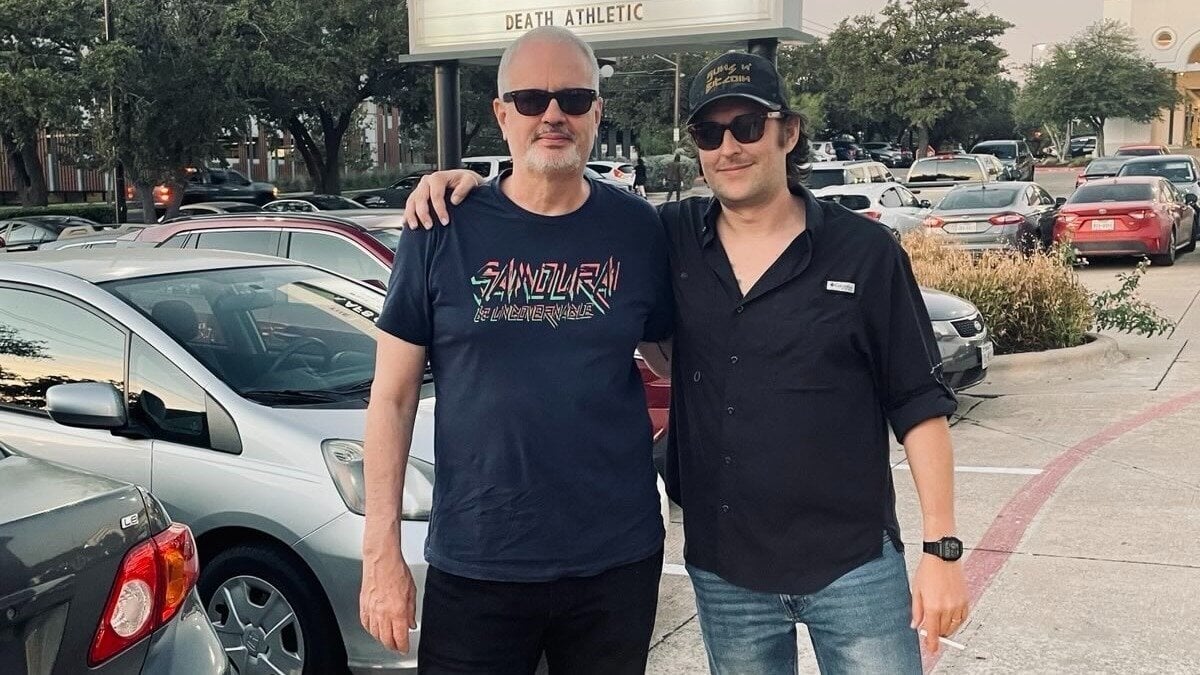
If you have time to read this article, you have time to sign the petition to pardon Samourai Wallet developers Keonne Rodriguez and William Hill.
Hester Peirce, The Boss
As many of you will know, The Rage rarely speaks positively of politicians, Government officials, or really anyone in this industry for that matter. SEC Commissioner Hester Peirce has grown to be one of these very few exceptions.
In August, Peirce gave a remarkable speech on the need and right to protect our privacy in financial transactions at the Science of Blockchain Conference, calling the consideration to place peer-to-peer transactions under the surveillance authorities of the Bank Secrecy Act (BSA) "a practice antithetical to a free society."
At the SEC's latest roundtable, Peirce reiterated her support for privacy in finance with yet another personal anecdote, speaking to her family's history of living under Nazi occupation in the Netherlands.
"A German officer came to my grandfather’s house to secure a room for the officer’s girlfriend," Peirce recalled. "Even in less dire times when the stakes are lower, the idea of having an uninvited stranger in your house, watching everything you do, is unthinkable."
"In this country, people have an expectation of privacy in their homes; the law sets up barriers to prevent government surveillance of people suspected of no wrongdoing," Peirce continued.
"Similar expectations and protections of privacy do not exist for our financial lives," Peirce said, calling the lack of financial privacy in the US "puzzling," while adding that "a walk through someone’s financial transactions will tell the government as much or more about someone as would a walk through her home."
Peirce's remarks were echoed by Chief of Operations of the SEC's Crypto Task Force Sumeera Younis, who reminded the audience that "it is not only what we transacted, but when and where, so my digital electronic footprint could tell you exactly where I've been all day and where I will be later today as well," while adding that "we don't have to live this way."
SEC Chairman Paul Atkins highlighted the need for privacy in cryptocurrencies from a different perspective, stating that "if the instinct of the government is to treat every wallet like a broker, every piece of software as an exchange, every transaction as a reportable event, and every protocol as a convenient surveillance node, then the government will transform this ecosystem into a financial panopticon."
However, as opposed to Peirce, who once again highlighted the need for technologies like mixers for ordinary citizens to make donations and engage in payments without broadcasting them to the world, Atkins rather advocated for mechanisms such as selective disclosure.
That the Chairman of the SEC takes a more reserved position on financial privacy is not necessarily surprising – but what was surprising was that several of the event's participants seemed to have no idea what privacy is, either.
 L0la L33tz
Not All Privacy Is Made Equal
The event was structured into two phases. First, some of the guests gave remarks and presentations, such as ZCash founder Zooko Wilcox, who demonstrated the privacy wallet Zashi to the audience and criticized financial surveillance regulations for overstepping people's constitutionally protected rights.
The following discussion round was led by Director of Policy for AML & Cyber Risk at the Crypto Council for Innovation Yaya Fanusie, who set the tone by tracing the definition of the word privacy back to it's Latin roots, noting that one of the many definitions of the term privatus is something that is "set apart." However, the term's much more common definition is something which is private, originating from the latin privus, meaning "one's own," unfortunately found no mention by Fanusie.
Particularly in cryptography circles, it is this latter definition that has formed the basis of what privacy means in the modern age, namely the power to selectively reveal oneself to the world.
Several presenters and panelists at the event however appeared to have mistaken this very common definition of privacy as the power for someone else to reveal you to the world.
This included CEO and Executive Director of Aleo Network "Koh," who spoke to blockchain surveillance firms being provided view keys to 'private' currencies for the purpose of sanctions monitoring and wallet screening, as well as Wayne Chang of SpruceID, which is developing the Mobile Drivers License together with the DMV, who advocated for the use of digital identities to let users control what information is shared with certain services.
Former Cyber and Emerging Technology Policy Specialist at the U.S. Treasury’s Financial Crimes Enforcement Network Carole House then went on to attempt to redefind the fundamental frameworks of privacy altogether. Claiming herself to be a "good cybersecurity nerd", House argued that nothing in existing privacy frameworks "points to that privacy must be attained via unbreakable anonymity," and that there are "elements of privacy that can end up not necessarily involving consent." (For those who remember, House had previously also lobbied for the appliance of sanctions law to Bitcoin miners.)
Designing solutions which let others, such as digital asset issuers or the Government, decide what information is shared about you and when, is of course no actual privacy at all – Rather, such contemplation is akin to claiming that GoogleMail is giving users privacy simply because it doesn't publish the contents of your emails on the Internet.
Similarly, arguing that handing users control over what information is shared with services does not solve the problem of our society's inherent lack of privacy either, as you can hardly be understood to have the right to privacy when the revealing of personal information is required for you to participate in the global financial system, with the only alternative that remains being the exclusion from financial services overall; This is not a right – it is extortion.
 L0la L33tz
Privacy as a Constitutional Issue
The panelists Prof. J.W. Verret of George Mason Univserity, Linda Jeng, CEO of Digital Self Labs, and Jay Stanley of the ACLU, then balanced out the discussion.
"I would recommend reading Justice Thomas' concurrence in a case called McIntyre," Verret told the audience, "where he reviews the history of the founder's understanding of privacy as anonymity. Boy, they were privacy maxis and anonymity maxis like me! Partly because they loved their favorite hobby, which was lighting each other up in the press – anonymously – and efforts to deanonymize them were successfully fought back."
In the 1995 ruling, the Supreme Court had held that prohibiting anonymous campaign literature would be unconstitutional as a violation of the First Amendment.
In closing, Verret highlighted the prosecution of alleged Bitcoin Fog operator Roman Sterlingov, the prosecution of the developers of Tornado Cash, and called for a pardon for Samourai Wallet developer Keonne Rodriguez, stating that he was hoping to get more regulatory clarity on this than the Blanche memo.
Jeng then described the beginnings of her regulatory career at the Office of the Comptroller of the Currency's (OCC) New York office. "Second day of my job, I saw the planes hit the World Trade Center. That led to Congress passing the PATRIOT Act within two months, and I found myself working on BSA/AML enforcement based on these expanded authorities."
"But now you fast forward to [today], and you see last year alone US banks spent $5.9 Billion on financial crime compliance, but intercepted less than 1% of illicit activities. So I argue that our current BSA/AML regime is broken," Jeng criticized.
"But it's not only just broken," Jeng continued. "It also leads to an underbanked population of over 14% and a unbanked population of 4% because it's definitely to expensive to bank populations that are high risk, who are either poor or from single family homes, or if you're black or hispanic," she highlights. "I'm raising this as we have issues with the regime itself, but they're also constitutional issues."
Addressing the notion of digital identities, Stanley stated that "we are gravely concerned about digital identity systems, the digital drivers license systems that are being passed in the states, which are not being done with sufficient protections for civil liberties, especially the fact that we will wake up one day and because it's so easy to share your ID, that every website you go to is going to demand that you 'click here to share a digital drivers license'," noting that this "could actually worsen people's privacy."
Regarding digital payments, Stanley stated that "financial privacy is a mess right now," quoting the story of a Washington Post reporter titled "The Spy in your Wallet: Credit Cards have a Privacy Problem," who tracked all entities that gained access to his purchase of a banana.
"Privacy as a civil liberties issue is something [...] that adheres on individuals," Stanley concluded. "It does not adhere in companies or large organizations."
Independent journalism does not finance itself. If you enjoyed this article, please consider making a donation. If you would like to note a correction to this article, please email corrections@therage.co


